Dr. rer. medic. Iris Schulz
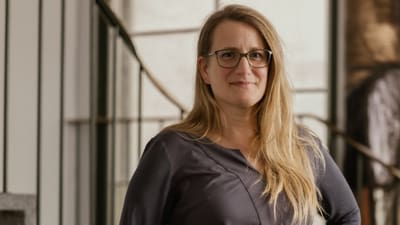
Dr. rer. medic. Iris Schulz ist seit 2018 am Institut für Rechtsmedizin der Universität Basel. Sie ist Forensische Genetikerin SGRM und Abteilungsleiterin Forensische Genetik.
ORCID ID: https://orcid.org/0000-0002-7933-2563
Berufserfahrung
seit 2018 | Abteilungsleitung Forensische Genetik, Institut für Rechtsmedizin der Universität Basel |
|---|---|
2013 – 2018 | Betriebsleitung, Institut für Blutgruppenforschung Legal Governmental Chemist (IfB LGC) GmbH, Köln |
2012 – 2013 | Elternzeit |
2011 – 2012 | Laborleitung, IfB LGC GmbH, Köln |
2008 – 2012 | Wissenschaftliche Mitarbeiterin, IfB LGC GmbH, Köln |
2006 – 2007 | Wissenschaftliche Mitarbeiterin, Institut für Rechtsmedizin, München |
2002 – 2006 | Wissenschaftliche Mitarbeiterin, Doktorandin, Institut für Rechtsmedizin Köln |
Ausbildung
2018 | Anerkennung als Forensische Genetikerin SGRM |
|---|---|
2016 | Öffentlich bestellte und vereidigte Spuren- und Abstammungsgutachterin, Industrie- und Handelskammer (IHK) Köln (ab 2021 IHK Potsdam) |
2008 | Sachverständige für Abstammungsgutachten KFQA (ab 2013 DGAB Fachabstammungsgutachterin) |
2006 | Promotion am Institut für Rechtsmedizin an der Universität Köln |
2002 | Diplomarbeit an der Universität Bonn |
1997 – 2002 | Studium der Biologie an der Universität Bonn |
Wichtigste Publikationen
Sorg A, Anslinger K, Böhme P, Dierig L, Ender M, Grabmüller M, Kulstein G, Pfeifer M, Schmidt U, Schulz I, Seidel M, Zehner R, Stein C, Zieger, M. Evaluative sub-source and activity level reporting in Austria, Germany and Switzerland. Forensic Sci Int Genet. 2025. https://doi.org/10.1016/j.forsciint.2025.112729.
Schulte J, Egger S, Kron S, Scheurer E, Schulz I. Evaluating novel and conventional cell-separation techniques for sexual assault investigations. J Forensic Sci. 2025. https://doi.org/10.1111/1556-4029.70131
Senst A, Bonsiepe H, Kron S, Schulz I. Application of the Agilent 2100 Bioanalyzer instrument as quality control for next-generation sequencing. J Forensic Sci. 2024. https://doi.org/10.1111/1556-4029.15601.
Schulte J, Hotz G, Szinnai G, Christ E, Foderà G, Krüsi K, Nussberger P, Kron S, Schulz I. Exploring the potential of genetic analysis in historical blood spots for patients with iodine-deficient goiter and thyroid carcinomas in Switzerland and Germany (1929–1989). BMC Med Genomics. 2024, https://doi.org/10.1186/s12920-024-01947-y.
Schulz I, Schulte J, Wand D. Zygotic-splitting after in vitro fertilization and prenatal parenthood testing after suspected embryo mix-up – a case report. Int J Legal Med. 2024, https://doi.org/10.1007/s00414-024-03245-9.
Hogg J, Vandepoele ACW, Zaccheo N, Schulte J, Schulz I, Dubois J, Frank M, Marciano MA. Targeted recovery of male cells in a male and female same-cell mixture. J Forensic Sci. 2024. http://doi.org/10.1111/1556-4029.15514.
Schulte J, Caliebe A, Marciano MA, Neuschwander P, Seiberle I, Scheurer E, Schulz I. DEPArray™ single-cell technology: A validation study for forensic applications. Forensic Sci Int Genet. 2024. https://doi.org/10.1016/j.fsigen.2024.103026.
Schulte J, Seiberle I, Kron S, Marciano MA, Scheurer E, Schulz I. A systematic approach to improve downstream single-cell analysis for the DEPArrayTM technology. J Forensic Sci. 2023. https://doi.org/10.1111/1556-4029.15344.
Schulte J, Rittiner N, Seiberle I, Kron S, Schulz I. Collecting touch DNA from glass surfaces using different sampling solutions and volumes: Immediate and storage effects on genetic STR analysis. J Forensic Sci. 2023. https://doi.org/10.1111/1556-4029.15305
Währer J, Kehm S, Allen M, Brauer L, Eidam O, Seiberle I, Kron S, Scheurer E, Schulz I. The DNA-Buster: The evaluation of an alternative DNA recovery approach. Forensic Sci Int Genet. 2023. May. 64. https://doi.org/10.1016/j.fsigen.2023.102830.
Senst A, Caliebe A, Drum M, Cossu C, Zieger M, Scheurer E, Schulz I. Recommendations for the successful identification of altered human remains using standard and emerging technologies: results of a systematic approach. Forensic Sci Int Genet. 2023. Jan. 62. 102790. https://doi.org/10.1016/j.fsigen.2022.102790
Egger S, Vöhringer C, Währer J, Schulz I. Technical note: Comparison of forensic swabs for intravaginal sampling. Science & Justice. 2022. 62:418-423. https://doi.org/10.1016/j.scijus.2022.05.006.
Seiberle I, Währer J, Kron S, Flury K, Girardin M, Schocker A, Schulz I. Collaborative swab performance comparison and the impact of sampling solution volumes on DNA recovery. Forensic Sci Int Genet. 2022. Jul. 59. 102716. https://doi.org/10.1016/j.fsigen.2022.102716.
Senst A, Caliebe A, Scheurer E, Schulz I. Validation and beyond: Next Generation Sequencing of forensic casework samples including challenging tissue samples from altered human corpses using the MiSeq FGx system. J Forensic Sci. 2022;00:1–17. https://doi.org/10.1111/1556-4029.15028.
Senst A, Scheurer E, Gerlach K, Schulz I. Which tissue to take? A retrospective study of the identification success of altered human remains. J Forensic Leg Med. 2021 Nov;84:102271. https://doi.org/10.1016/j.jflm.2021.102271. Epub 2021 Oct 26. PMID: 34715438.
Ralf A, Lubach D, Kousouri N, Winkler C, Schulz I, Roewer L, Purps J, Lessig R, Ploski R, Krajewski P, Dobosz T, Henke L, Henke J, Larmuseau MHD, Kayser M. Identification and characterisation of novel rapidly mutating Y-chromosomal short tandem repeat markers. Human Mutation. 2020 Jun; 41:1680-1696. https://doi.org/10.1002/humu.24068.
Egger S, Wand D, Scheurer E, Schulz I, Dion D, Balitzki B. Fehlerhafte Geschlechtsbestimmung aufgrund partieller Deletion des Y-Chromosoms. Rechtsmed. 2020 Apr;30:94-100. https://doi.org/10.1007/s00194-020-00373-5.
